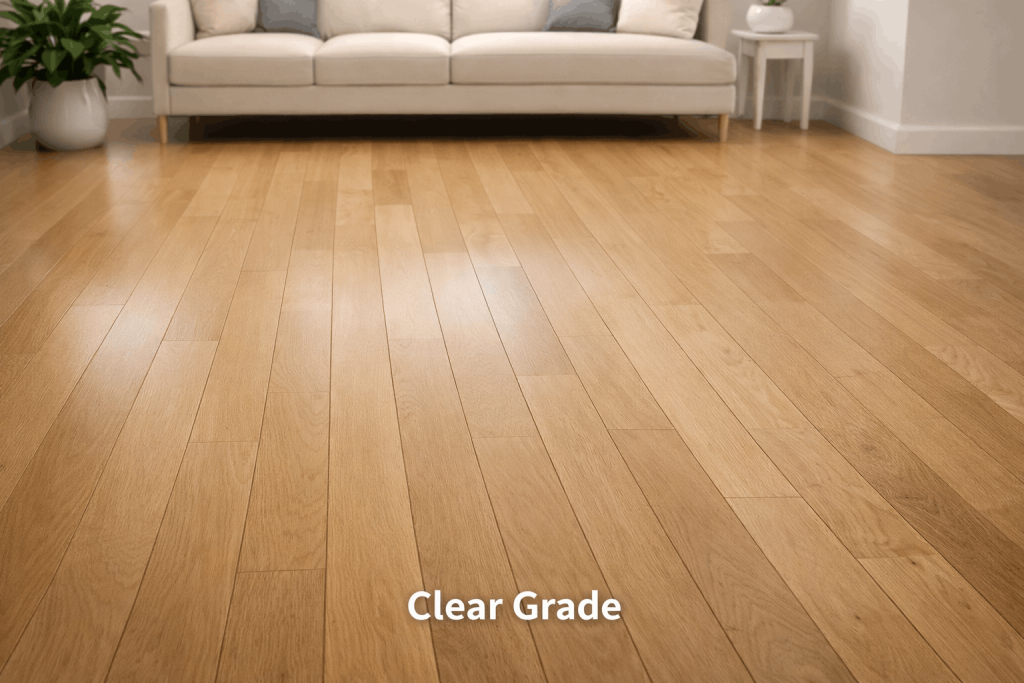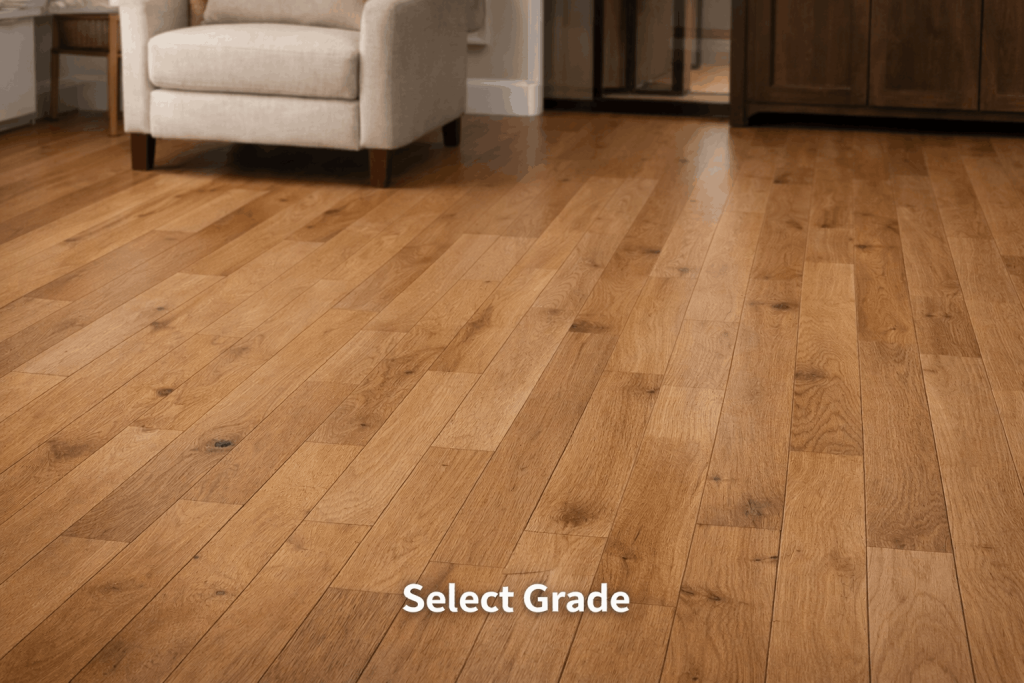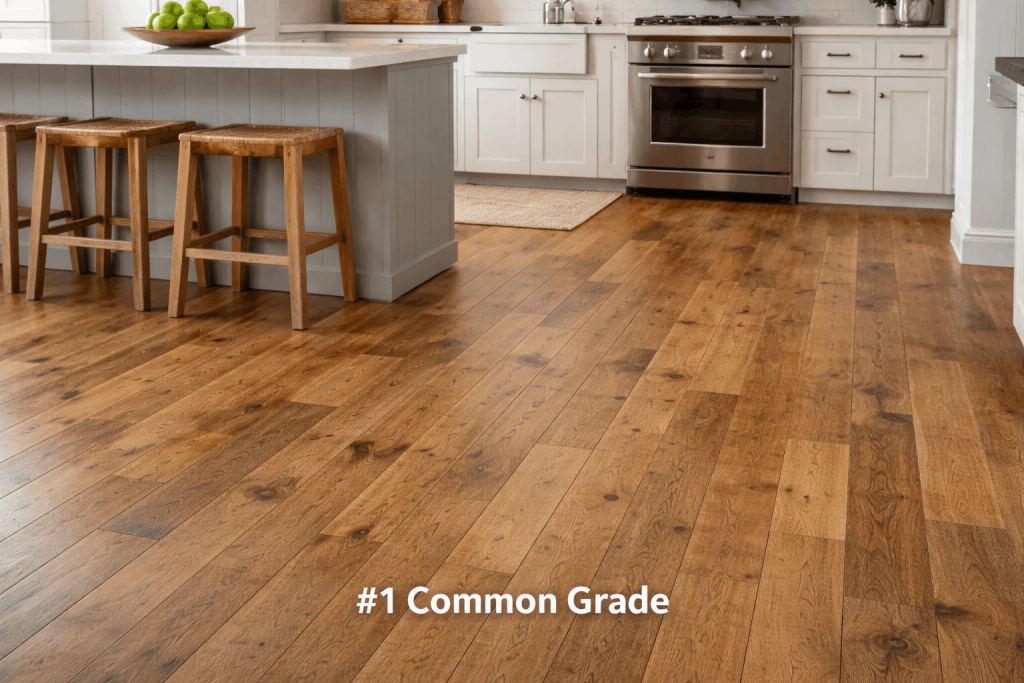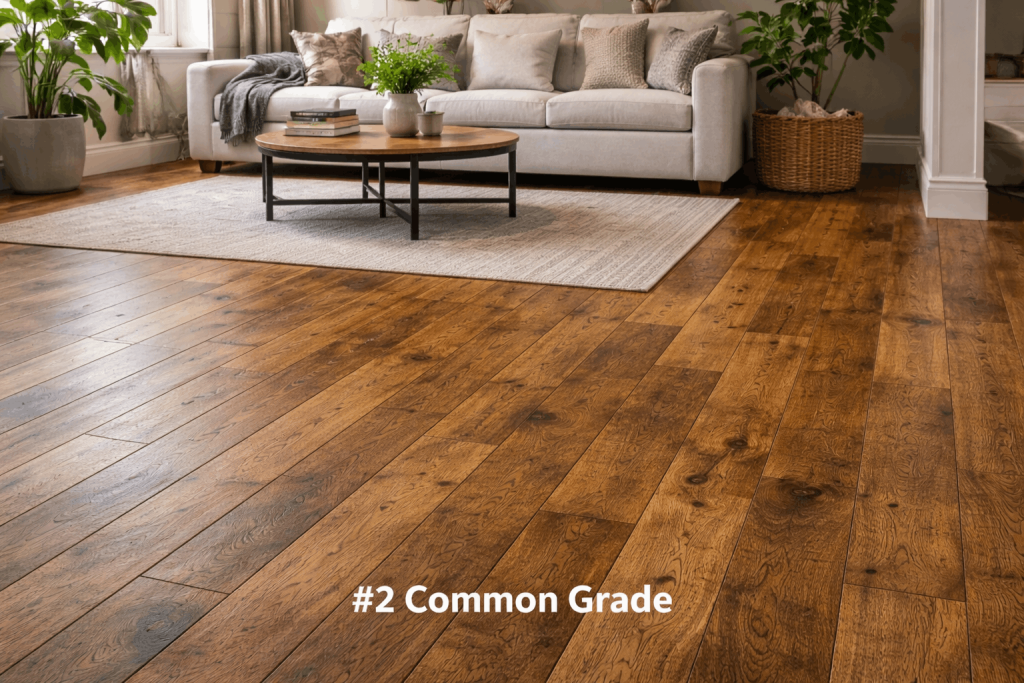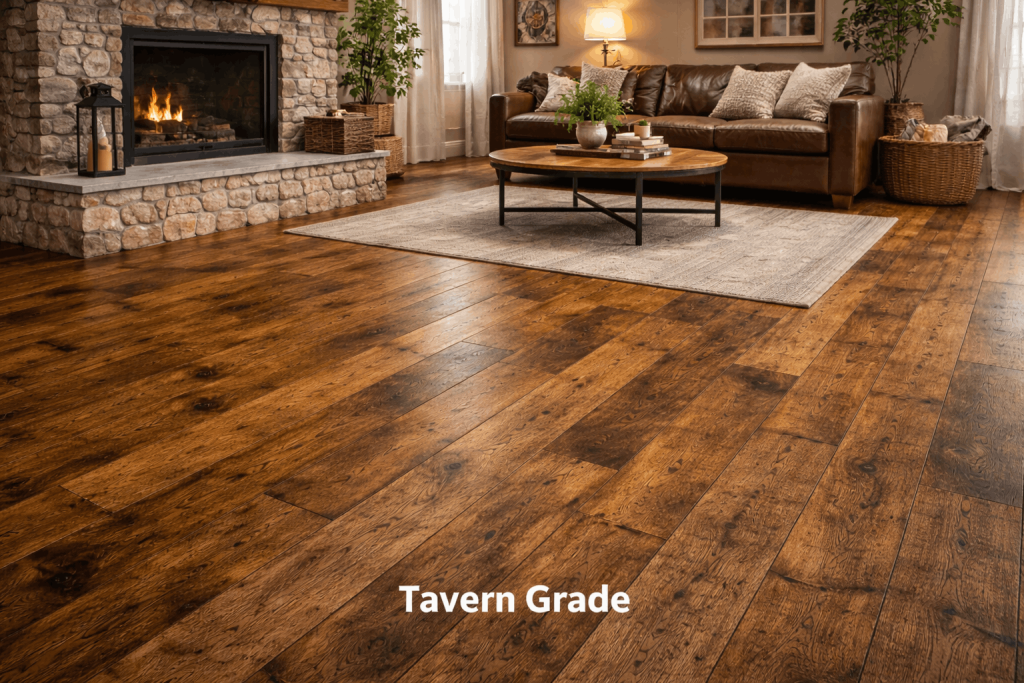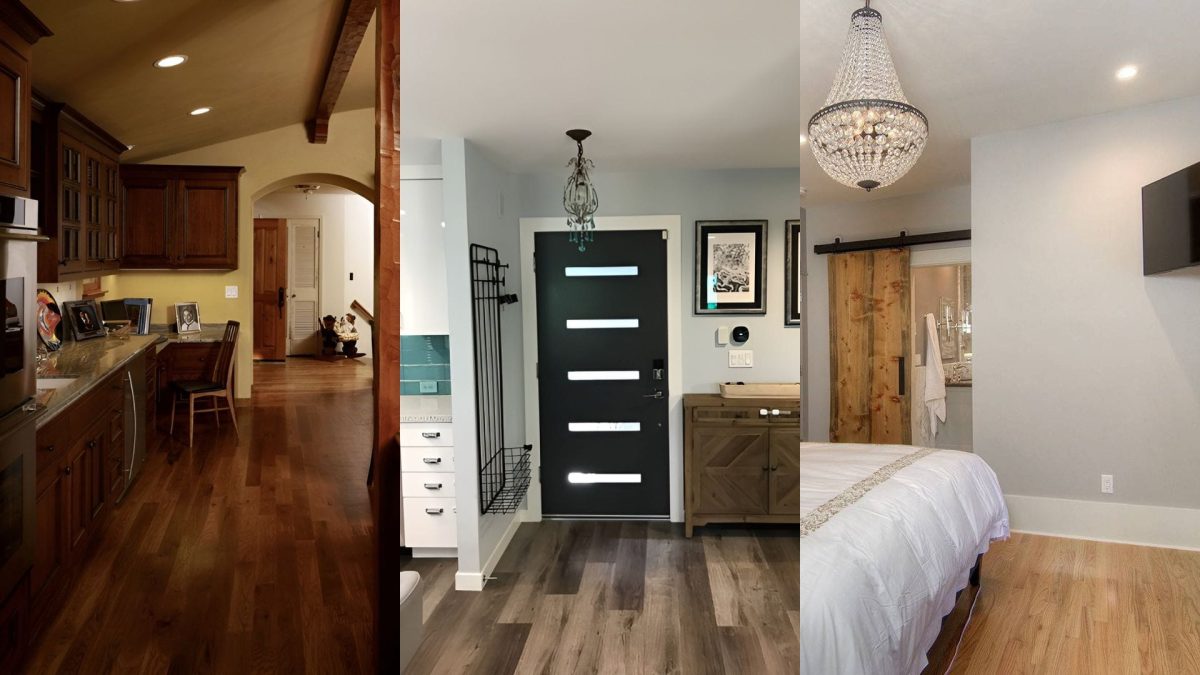
Hardwood floors can look vastly different from one plank to the next. Subtle color shifts, natural grain, and knots that give each plank its own story.
If you’ve shopped for hardwood, you’ve likely seen labels like Clear, Select, #1 Common, or Character Grade and assumed they were quality rankings for good, better, and best.
They’re not.
Here’s the key thing most people miss: hardwood flooring grades are a naming convention mainly used to describe appearance. Every grade we carry at Slaughterbeck Floors Inc. is structurally sound, precisely milled, and built to stand up to Bay Area living.
Grades sort boards by how much natural character is visible – color variation, knots, mineral streaks, contrast, and small checks or pinholes. It’s important to understand that while grades are primarily visual classifications, boards with more natural features can behave differently over time due to knots, checks, and grain variation. While this doesn’t determine whether a floor is structurally sound, it does influence how much natural movement and character you’ll see over time.
- Higher grades = cleaner, more uniform look
- Lower grades = richer variation and personality
Neither is inherently “better.” They’re just different aesthetics for different lifestyles. With added character comes more natural variation in the wood, which can mean greater movement over time compared to more uniform grades.